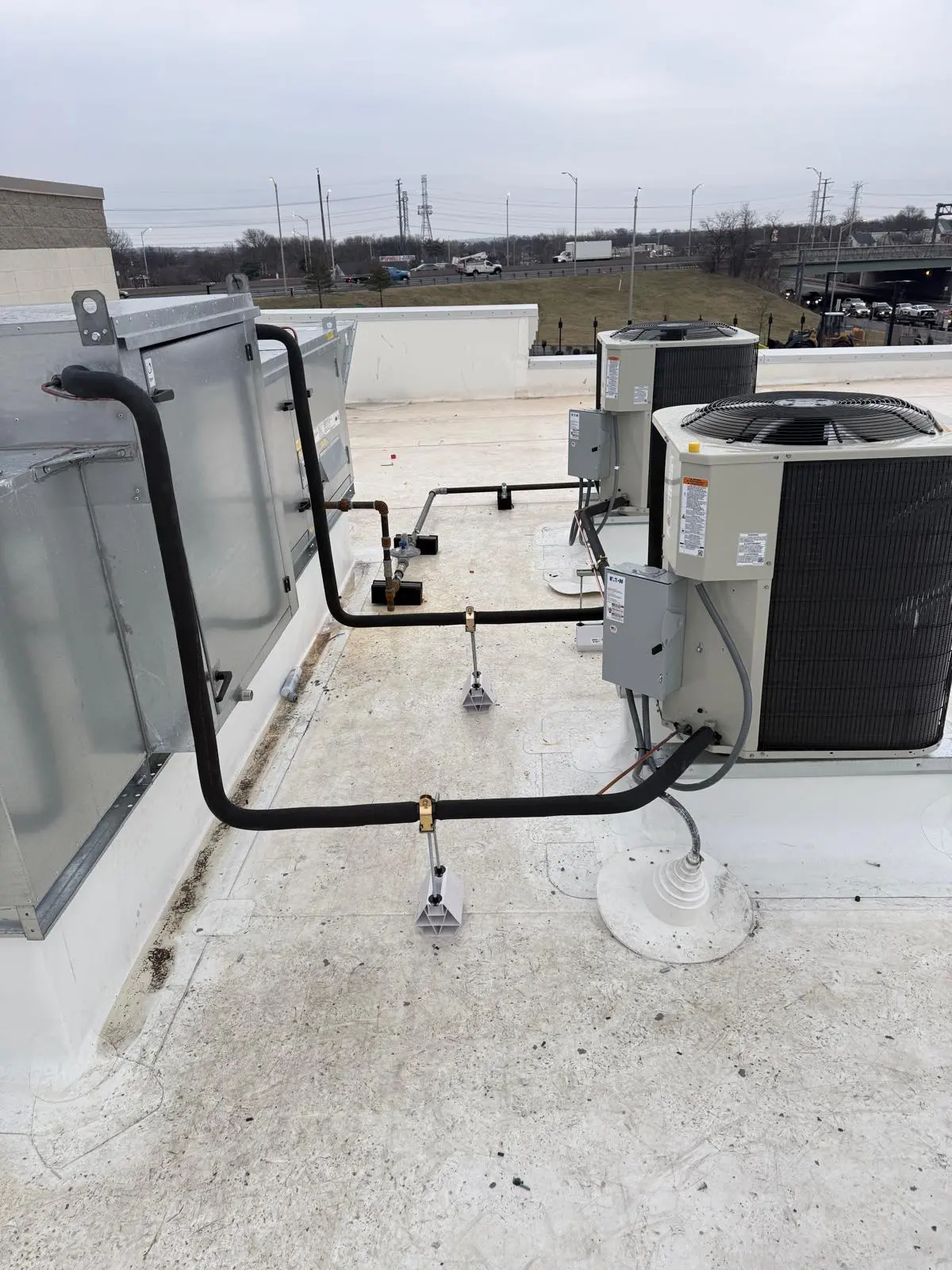
When your heating or cooling system breaks down, the big question is whether to repair it or replace it. It is rarely an obvious call. A repair costs less today, but pouring money into an old, failing system can cost far more over time. Replace too early and you spend on equipment you did not need yet; wait too long and you face rising bills and repeated breakdowns. For New Jersey homeowners, where systems work hard year round, making the right choice matters. The good news is that a few clear guidelines make the decision much easier. In this guide, we walk through the rules of thumb the pros use, the situations where a repair is clearly the smart move, and the signs that point toward replacement instead. We will also explain how to get an honest assessment so you can decide with confidence rather than guesswork or sales pressure.
The 50% Rule of Thumb
One of the simplest guidelines is the 50 percent rule. If a single repair costs more than half the price of a new system, replacement is usually the smarter investment. A related idea is to multiply your system’s age by the repair cost; if that number is high, replacement often wins. For example, a small repair on a five-year-old unit is an easy yes, while a major repair on a fifteen-year-old system rarely pays off. These rules are not perfect, but they give you a quick gut check before you commit. The key is looking at the whole picture, not just today’s repair bill. A cheap fix that buys you a few months on a dying system is often more expensive than replacing it once and being done.
When Repair Makes Sense
Repair is often the right call, especially for newer systems. If your equipment is well within its expected lifespan, has been maintained, and hits a one-time problem, fixing it is usually the smart, affordable choice. Common repairs like a capacitor, a igniter, a thermostat, or a motor are straightforward and restore years of service. Repair also makes sense when the issue is minor, the system is still efficient, and you are not seeing a pattern of breakdowns. If this is the first real problem in a system under about ten years old, lean toward repair. A good technician will tell you honestly when a fix is all you need, rather than pushing a replacement you do not require. Not every problem means it is time for a new system.
When Replacement Is the Better Choice
Replacement becomes the smarter path as systems age and problems stack up. If your equipment is past its expected lifespan, needs an expensive repair, or has broken down several times recently, a new system usually costs less over time. Rising energy bills are a strong signal, since older units run far less efficiently than modern ones, and the savings from new equipment can offset much of the cost. Uneven comfort, constant running, and frequent service calls all point the same direction. If your system uses outdated refrigerant that is expensive or hard to get, that tips the scale too. Replacing lets you start fresh with efficient, reliable equipment sized correctly for your home, which means better comfort, lower bills, and far fewer surprise repairs down the road.
Getting an Honest Assessment in New Jersey
The best way to decide between repair and replacement is a straight, professional assessment. A licensed technician can inspect your system, diagnose the real problem, and tell you honestly whether a repair will hold or whether replacement is the better value. Be wary of anyone who pushes a new system without explaining why, and just as wary of endless repairs that never solve the core issue. A trustworthy contractor lays out your options, shares clear pricing for both paths, and lets you make the call. In New Jersey, where comfort matters in every season, you deserve advice that fits your home and budget, not a sales script. Free estimates make it easy to get a second opinion before you spend, so you can move forward with confidence.