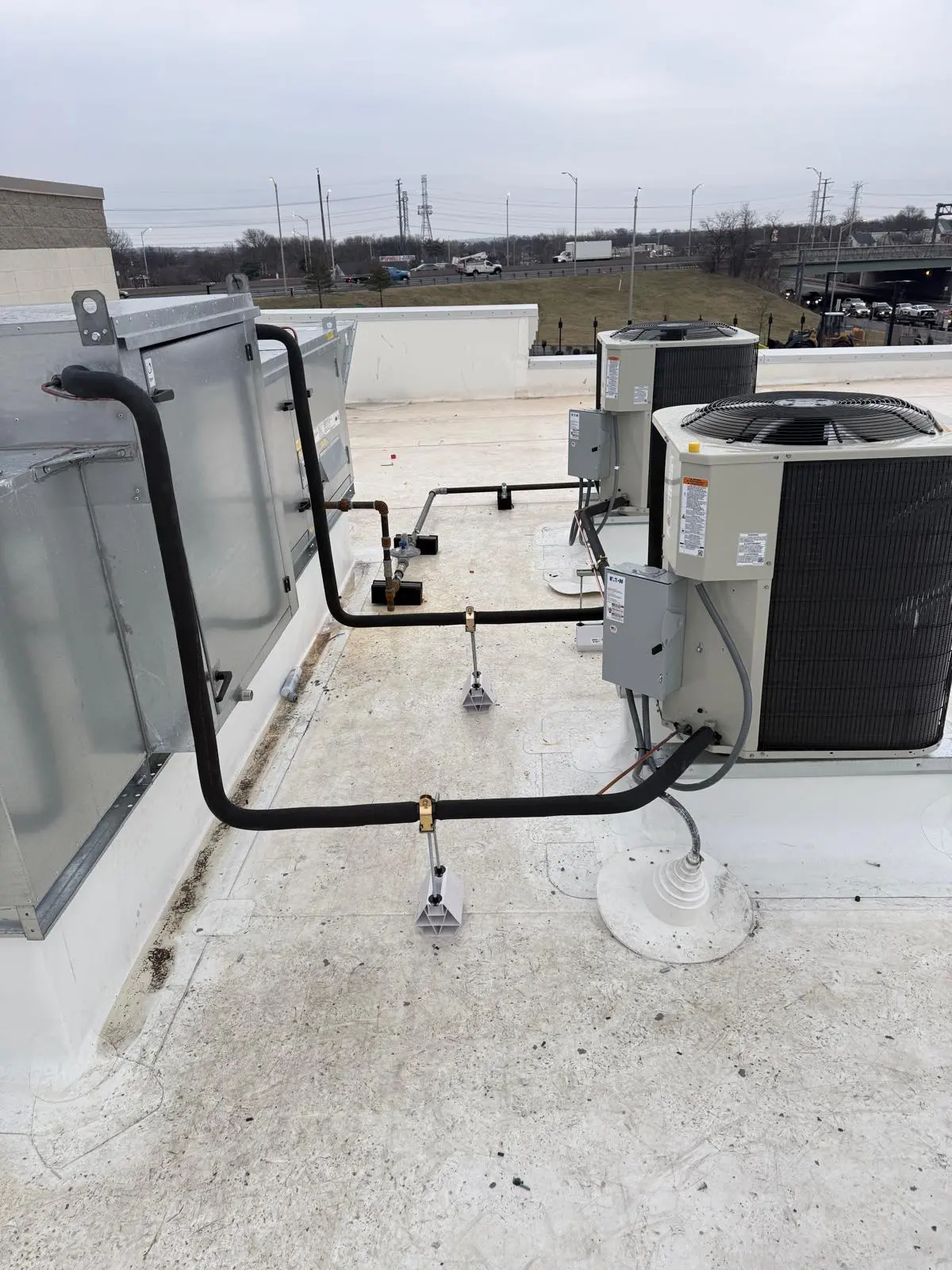
Choosing between a mini split and central air is one of the biggest comfort decisions a New Jersey homeowner can make. Both cool your home well, both can heat it, and both have loyal fans, so the right answer really depends on your house and your goals. Central air is the familiar choice, using ductwork to send conditioned air through the whole home. Ductless mini splits skip the ducts entirely, mounting units in individual rooms or zones. Each approach has clear strengths and a few trade-offs around cost, efficiency, and installation. In this guide, we explain how each system works, compare them on the things that matter most, and help you figure out which one fits your home, your budget, and the way you actually live. Whether you are building new, replacing an old system, or cooling a space that ducts never reached, this comparison will make the choice clearer.
How Central Air Works
Central air conditioning cools your entire home from one system. An outdoor condenser works with an indoor unit to cool air, which then travels through a network of ducts to vents in every room. A single thermostat controls the whole house. The big advantage is even, whole-home comfort with hardware that mostly stays out of sight. If your home already has good ductwork, central air is often the natural choice and can be very cost-effective to install. The trade-off is those ducts. If they leak, are poorly designed, or do not exist yet, you lose efficiency or face a bigger project to add them. Central air also cools the whole house at once, which can waste energy if you only need certain rooms comfortable.
How Ductless Mini Splits Work
A ductless mini split skips the ductwork completely. An outdoor unit connects to one or more indoor units, each mounted in a specific room or zone, using small refrigerant lines through a tiny wall opening. Each indoor unit has its own control, so you set different temperatures in different rooms. This makes mini splits ideal for older New Jersey homes without ducts, finished attics and basements, additions, and rooms that are always too hot or too cold. Because you condition only the spaces you use, mini splits are often very energy efficient. They run quietly and heat as well as cool, which helps in our cold winters. The main trade-offs are the visible indoor units and a higher upfront cost per zone in some cases.
Cost, Efficiency, and Comfort Compared
On cost, central air is often cheaper to install when solid ductwork already exists, while mini splits can cost more upfront, especially for multiple zones. But mini splits frequently win on running costs, since zoning lets you avoid cooling empty rooms. On efficiency, modern versions of both are strong, though ductless systems avoid the energy lost through leaky ducts, which can be significant. On comfort, central air delivers seamless whole-home cooling with hidden equipment, while mini splits offer precise, room-by-room control. Noise tends to favor mini splits, which run quietly. The right pick depends on your priorities: whole-home simplicity and hidden hardware point to central air, while flexibility, zoning, and efficiency in a home without ducts point to a mini split.
Which One Fits Your New Jersey Home?
The best choice comes down to your specific home. If you already have good ductwork and want simple, whole-home comfort, central air is usually the smart, cost-effective pick. If your home has no ducts, has rooms that never feel right, or includes additions and finished spaces, a ductless mini split is often the better fit and saves the expense of installing ducts. Many New Jersey homes even benefit from a mix, using central air for the main house and a mini split for a tricky room or addition. There is no single right answer, only the right answer for your layout, budget, and comfort goals. The clearest way to decide is a free in-home assessment, where a licensed technician looks at your space and lays out honest options.