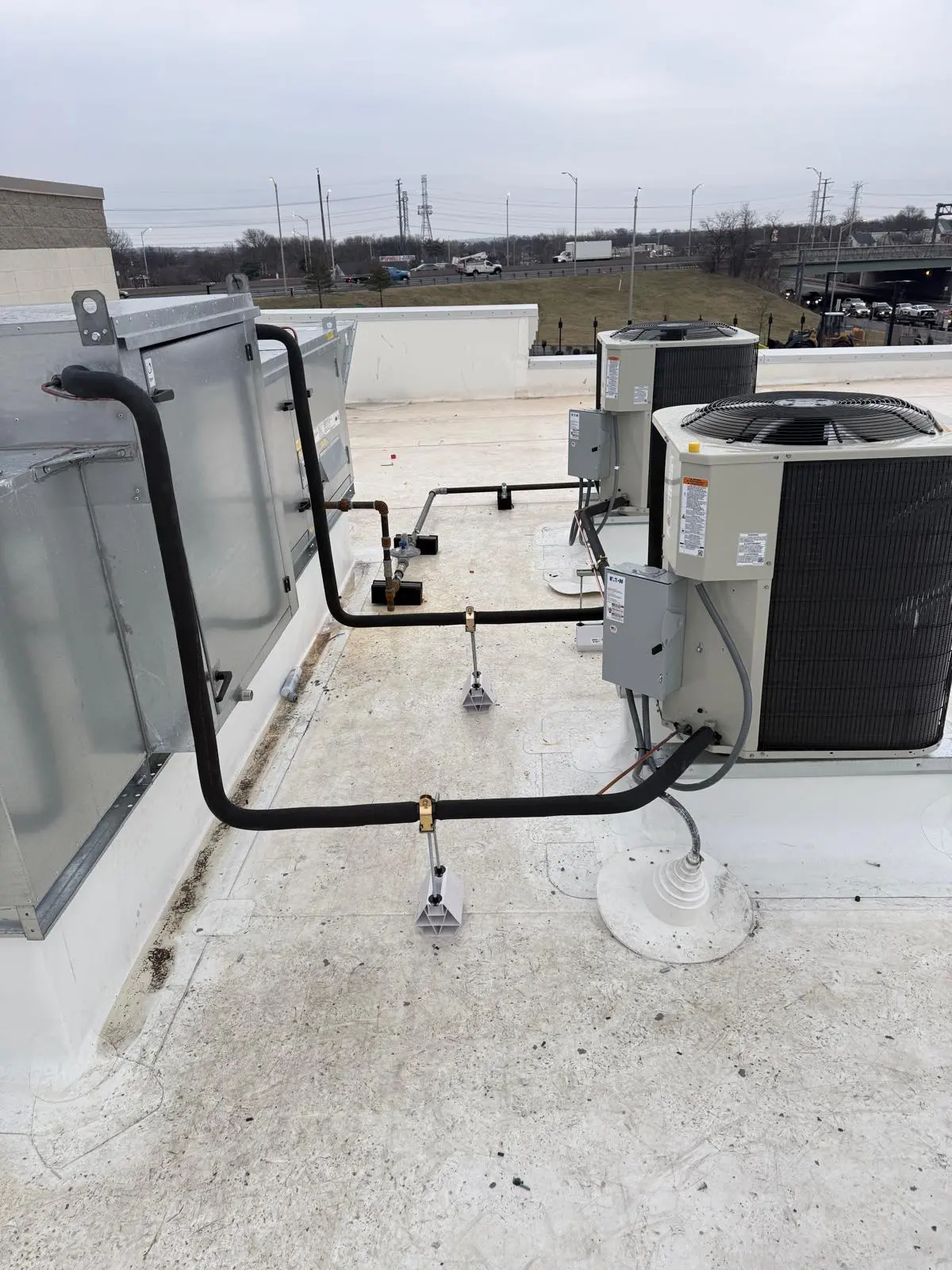
There are few things worse than a hot New Jersey afternoon when your AC is not cooling the house. You set the thermostat, wait, and the air coming from the vents still feels warm. Before you panic or assume the worst, it helps to know that many cooling problems come from small, fixable issues. Some you can handle yourself in a few minutes. Others need a licensed HVAC technician. In this guide, we walk through the most common reasons an air conditioner stops cooling, what you can safely check on your own, and when it makes sense to call a pro. We will also share a few simple habits that keep your system running strong through humid New Jersey summers. If your AC is still blowing warm air after the basics, we will help you understand what is likely going on and what to do next. A cool, comfortable home is usually closer than you think.
Check Your Thermostat and Air Filter First
Before assuming your system is broken, start with two quick checks. First, look at your thermostat. Make sure it is set to cool, not just fan, and that the target temperature is below the room temperature. A dead battery or a bumped setting causes more false alarms than people expect. Next, pull out your air filter and hold it up to the light. If you cannot see through it, it is clogged. A dirty filter chokes airflow, so your AC runs and runs but never cools well. Swapping in a clean filter is cheap, takes two minutes, and often restores cooling on its own. If both look fine and the air is still warm, the problem is likely deeper in the system, and it is worth moving on to the next checks.
Common Reasons Your AC Is Not Cooling
When the basics check out, a few usual suspects are to blame. Low refrigerant, often from a slow leak, is one of the most common. Your system needs the right charge to pull heat out of the air, and a leak leaves it struggling. Frozen evaporator coils are another, usually caused by poor airflow or low refrigerant, and they block cooling entirely. A failing compressor, a tripped breaker, or a faulty capacitor can also stop cold air in its tracks. Dirty outdoor condenser coils, buried in leaves or dust, make the whole system work harder for less. Most of these need a technician with the right tools and training. Refrigerant work in particular is regulated, so it is not a safe do-it-yourself job.
When It Is Time to Call an HVAC Pro
Some AC problems are simply not worth the risk of a DIY fix. If you smell burning, hear grinding or clicking, see ice on the lines, or notice the breaker tripping again and again, shut the system off and call a licensed HVAC technician. The same goes for anything involving refrigerant or electrical components. A trained tech can diagnose the real cause quickly, often the same day, instead of guessing. In New Jersey summers, a system that quits duringa heat wave is more than an annoyance, especially for kids, older adults, and pets. A professional visit also protects your warranty and catches small issues before they turn into expensive repairs. When in doubt, it is safer and usually cheaper to get an expert opinion early.
How to Prevent AC Problems in NJ Summers
The best way to avoid a warm house in July is to stay ahead of trouble. Change your air filter every one to three months during heavy use. Keep the outdoor unit clear of leaves, grass clippings, and shrubs, leaving a couple of feet of space around it. Rinse the condenser gently with a hose once a season to clear dust. Most important, schedule a professional tune-up each spring before the heat arrives. During a tune-up, a technician checks refrigerant, cleans coils, tests electrical parts, and catches small problems early. Homeowners who maintain their systems get fewer breakdowns, lower energy bills, and longer equipment life. A little upkeep now saves a lot of stress during the hottest New Jersey days.